Insights / Campus Safety
Why Universities Stay Soft Targets: The Gaps Campus Under Siege Asks Leaders to Close
By Warren Pulley ·
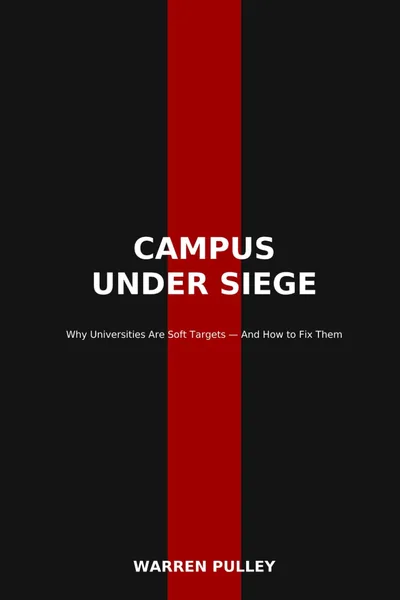
Campus Under Siege argues that campus safety is no longer theoretical. Universities remain soft targets, and the book is both an exposé of why and a playbook for fixing it. The most important takeaway for a reader: the failures are usually known in advance, and so are the fixes.
Which gaps does the book focus on?
- Behavioral threat assessment teams. Identifying and stopping potential attackers before violence, through a team that sees the whole picture.
- Mass notification failures. Why alerts still take too long, and how to fix them.
- Greek life hazing. How a culture of silence compromises student safety.
- Dorm and campus security audits. Closing gaps in access control, patrols, and response.
- Crisis leadership. Why presidents and deans are often unprepared for an active shooter event.
Why does notification speed matter so much?
Because minutes matter, and federal law already expects speed. Under the Clery Act regulations, an institution's emergency procedures must describe how it will immediately notify the campus community upon confirmation of a significant emergency or dangerous situation involving an immediate threat. The regulation also expects a process to confirm the emergency, decide who receives the alert, write the message, and start the system.
In practice, delays often come from not having decided those things in advance: who is allowed to send, what the template says, and who confirms. The book treats notification as a leadership problem, not just a technology problem.
What tools does it give a campus team?
The book includes a Campus Safety Self-Assessment Quiz to expose vulnerabilities, thirteen ready-to-use forms for threat intake, drills, and crisis planning, an expanded resource appendix linking to FEMA, DHS, FBI, Clery Act, and hazing prevention tools, and a glossary of terms such as ICS, NIMS, FERPA, and the Clery Act for non-specialists. It also reviews real-world cases, including Virginia Tech, Michigan State, Penn State, and UNC.
Who is it written for?
University presidents, trustees, and deans; campus law enforcement and security directors; parents sending a child to college; and students, faculty, and staff who want accountability. If your campus is building or refreshing a threat assessment team, read it alongside Integrated BTAM and use our guide to transient and substantive threats for the school-based model many teams use.
Get Campus Under Siege
Paperback on Amazon Kindle on Amazon See the book page
As an Amazon Associate I earn from qualifying purchases.
Working on a threat concern now? Get the free Threat Assessment First-Response Checklist.