Insights / Firearms Law & Safety
The Concealed Carry Legal Map: Why Owners Check the Law Before Every Trip
By Warren Pulley ·
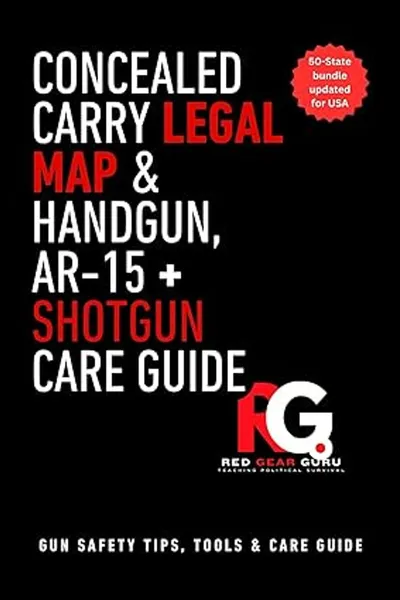
The key lesson of The Concealed Carry Legal Map & Handgun, AR-15 + Shotgun Care Guide is that a carry license or a lawful firearm at home does not travel with you automatically. Carry laws differ from state to state, and they change. Responsible owners check before every trip.
What does the guide cover?
- Concealed carry laws by state: permit requirements, training mandates, renewal processes, and restricted areas.
- Legal transport: step-by-step guidance on transporting firearms and ammunition by air, by vehicle, and across state lines, including reciprocity.
- Constitutional carry updates: where permitless carry is legal, and how that landscape has shifted.
- Safety and care: safe handling, storage, ongoing training, and basic maintenance.
What should you check before driving across state lines?
Start with reciprocity: whether your destination, and each state you pass through, recognizes your license. Then know the federal transport rule. Under 18 U.S.C. § 926A, a person who is not otherwise prohibited may transport a firearm from a place where they may lawfully possess and carry it to another such place, if during transport the firearm is unloaded and neither the firearm nor ammunition is readily accessible from the passenger compartment. In a vehicle without a separate trunk, the firearm or ammunition must be in a locked container other than the glove compartment or console.
That protection is narrow. It covers transport, not carry, and states and localities may apply it differently in practice. Check the law at your destination and along your route.
What about flying?
The Transportation Security Administration's rule is clear: you may transport unloaded firearms in a locked hard-sided container as checked baggage only, and you must declare the firearm and ammunition to the airline at the ticket counter. Airlines may have additional rules, and the laws at your destination still apply when you land.
Why does storage belong in a travel guide?
Because most problems on the road are not dramatic. They are a firearm left in a vehicle, an unsecured bag in a hotel room, or a stop where the owner is unsure of the local rule. Safe storage and current knowledge protect the owner and everyone around them.
A note on currency
Carry laws change frequently. Treat any printed guide as a starting point, and confirm the current law with official state sources before you travel. This post is general information, not legal advice. For a broader look at safety planning, see The Prepared Leader.
Get The Concealed Carry Legal Map
Kindle on Amazon See the book page
As an Amazon Associate I earn from qualifying purchases.
Working on a threat concern now? Get the free Threat Assessment First-Response Checklist.