Insights / Emergency Planning
The Prepared Leader: Five Things Leaders Must Get Right Before a Crisis
By Warren Pulley ·
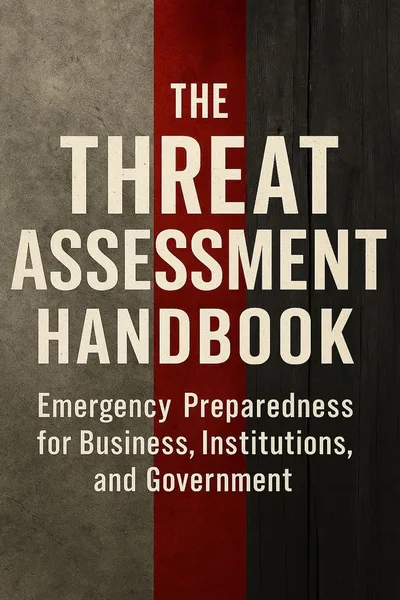
The Prepared Leader starts from a hard truth: when disaster strikes, leaders are judged not by what they knew, but by what they did. The book is written for leaders in universities, corporations, nonprofits, and government who want to move from hesitation to preparation, and it draws on standards from FEMA, DHS, and the FBI.
What does the book ask leaders to get right?
It is organized around five areas. Each is a question a leader should be able to answer before something goes wrong.
1. Have we identified, scored, and prioritized our threats?
The book shows leaders how to identify threats, score them, and decide which ones to address first. Not every risk deserves the same attention or budget. A scored list turns a vague worry into a plan.
2. Do we understand why warning signs get missed?
The book covers the psychology of violence and why warning signs are so often missed. In my experience, the signs are usually seen by someone. They are missed because they are scattered across people who never compare notes. That is the problem a threat assessment team is built to solve, as I explain in What Is a Behavioral Threat Assessment?
3. Do we have an Emergency Operations Plan that actually works?
The book walks through how to build and test an Emergency Operations Plan (EOP). The word that matters is test. A plan that has never been exercised is a document, not a capability. If you are unsure how an EOP differs from continuity planning, see The Difference Between EOPs and COOPs.
4. Are communication, training, and culture in place?
The book describes the lifesaving role of communication, training, and culture. People do in a crisis what they have practiced. Clear roles, practiced alerts, and a culture where people report concerns early do more than any single piece of equipment.
5. Is resilience a mindset here, or just a binder?
The book closes on the idea that resilience is not a plan but a mindset lived daily. Its own summary puts it plainly: preparedness isn't paranoia, it's responsibility.
Who should read it?
Presidents, deans, executives, HR and facilities leaders, and anyone who will be in the room when a crisis decision has to be made. It pairs well with Campus Under Siege for higher education and with Integrated BTAM for building the threat assessment side of the program.
Get The Prepared Leader
Paperback on Amazon Hardcover on Amazon Kindle on Amazon See the book page
As an Amazon Associate I earn from qualifying purchases.
Working on a threat concern now? Get the free Threat Assessment First-Response Checklist.