Insights / Threat Assessment
Integrated BTAM’s Eight Core Principles: Why Safe Programs Start With Support
By Warren Pulley ·
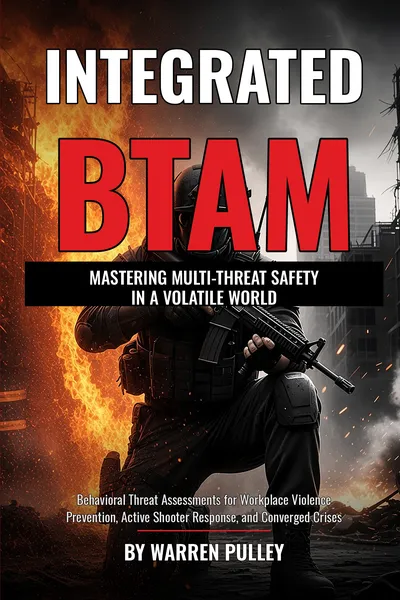
The most important thing to know about Integrated BTAM is that it is built on eight principles, not on a single form or scoring tool. The first one sets the tone for everything else: supportive intervention first. When a team spots concerning behavior, its default response is help, not punishment.
What are the eight core principles?
Chapter 4 of the book lays them out as the foundation of a unified behavioral threat assessment and management (BTAM) program, one that covers behavioral, physical, digital, and systemic risks:
- Supportive intervention first. The goal is prevention through help. Counseling, mediation, or support services come before discipline, an approach the book ties to U.S. Secret Service National Threat Assessment Center (NTAC) guidance.
- Psychological safety as foundation. People have to trust that a report will get a fair, non-punitive response. Cultures of blame silence the people who notice problems first.
- Simplicity over complexity. Critical procedures must work under stress: one-page standards, visual tools, and simple defaults.
- Scalability built in. The system has to work at any headcount or tempo.
- Multi-disciplinary integration. No single department owns safety. Administration, security, mental health, HR, IT, and facilities work together under clear command.
- Data-informed, not data-driven. Anonymized metrics point to patterns, but human judgment makes the call.
- Continuous adaptation. Threats change, from AI-generated content to remote-work vulnerabilities, so programs need regular review cycles.
- Leadership ownership at every level. Leaders train, model reporting, and recognize people who speak up.
Why does "support first" matter so much?
Because the principles depend on each other. As the book puts it, supportive intervention builds psychological safety, which encourages reporting. If employees or students believe a report will get a coworker fired or a classmate expelled, they stay quiet, and the team never sees the case until it is a crisis. A program that answers concerns with help hears about problems earlier, when they are easier to manage.
That does not mean a team ignores danger. It means discipline and law enforcement are tools the team uses when the facts call for them, not the reflex for every report.
How do you use the principles to check your own program?
The book turns the eight principles into a set of audit questions. A few of them are worth asking at your next safety meeting:
- Where is our intervention punitive rather than supportive?
- Do employees fear retaliation for reporting?
- Are our critical procedures too complex to use under stress?
- Which departments work in silos?
- When was our last comprehensive review?
- Does leadership actively champion safety?
The answers show where to start. From there, the book walks through applications for schools, healthcare, and corporate campuses, a 90-day rollout plan, and a toolkit of matrices, templates, and checklists.
Who is this book for?
It is written for the people who build and run threat assessment programs: school and campus leaders, HR and security managers, healthcare administrators, and anyone asked to stand up a team. If you are new to the field, start with What Is a Behavioral Threat Assessment? and then use the book to build the program around it. Teams that want practice material can pair it with its hands-on companion, The BTAM Case Workbook.
Get Integrated BTAM
Paperback on Amazon Kindle on Amazon See the book page
As an Amazon Associate I earn from qualifying purchases.
Working on a threat concern now? Get the free Threat Assessment First-Response Checklist.